Guide
Missed call text back: what it is, and whether it is worth it
It sends a text the moment you miss a call. That is genuinely useful and it is not magic, and the difference matters before you pay for one.
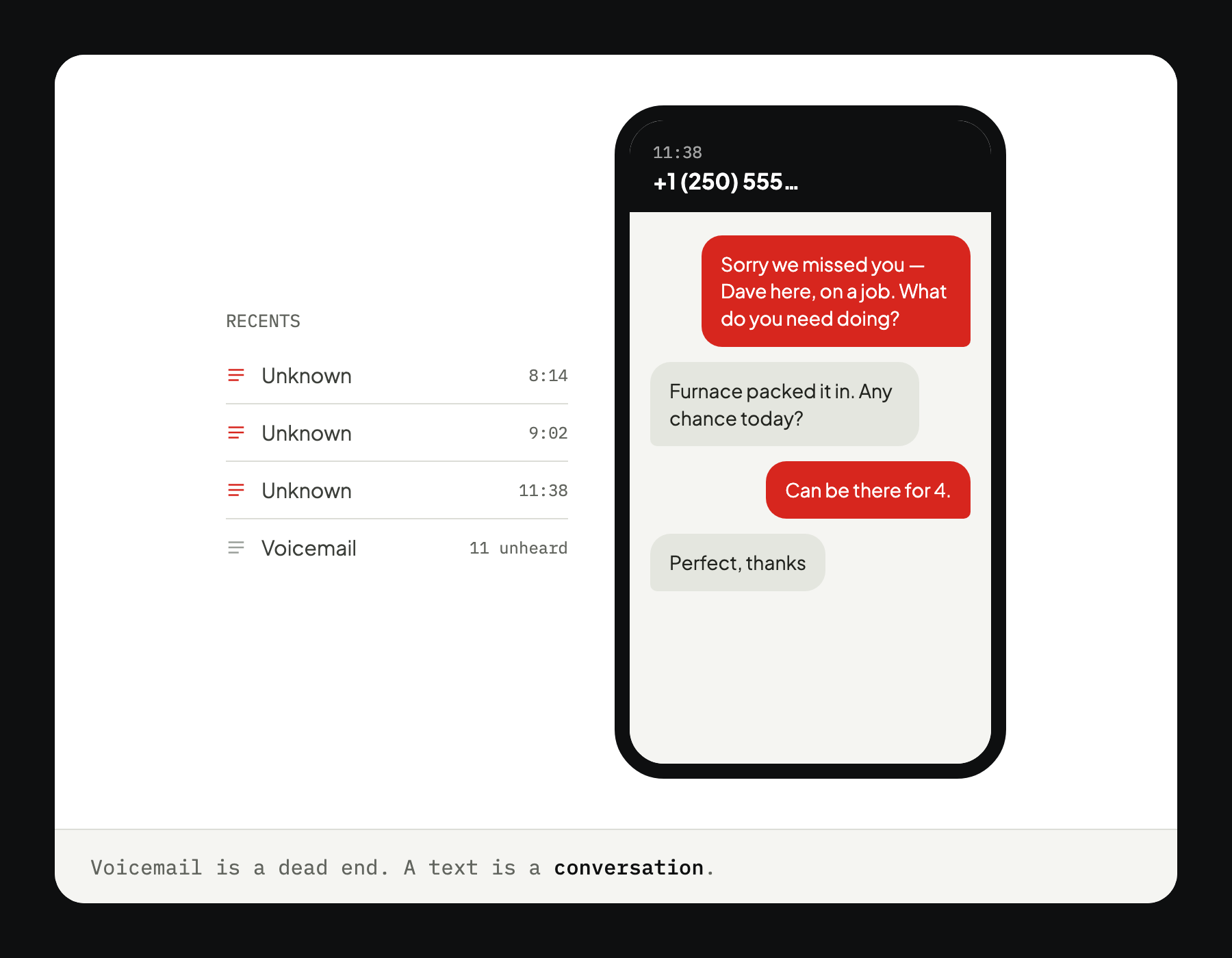
Short answer: when a call goes unanswered, the system texts the caller within seconds so the conversation continues in a channel you can answer from a roof. It narrows the gap between a missed call and a reply. It does not answer the phone, and it does not book the job for you.
What it actually does
A call comes in. You are under a sink, on a roof, or driving. It rings out.
Within a few seconds, the caller gets a text: you missed them, you will get back to them, and can they say what they need. They reply, because replying to a text costs nothing. Now you have a conversation you can pick up at four o'clock instead of a voicemail notification you will look at on Thursday.
That is the entire mechanism. It is not sophisticated and it does not need to be.
Why texting works better than voicemail
Voicemail asks the caller to perform a monologue into silence, and then asks you to listen to it in order, at a time when you can hear. Both halves are worse than a text.
- They can reply from anywhere: a supermarket queue, a meeting, a house with a very loud dog
- You can reply from a job site, between two things, with one hand
- It is written down, so the address and the fault are on the screen, not in your memory of a message
- It stays open. A voicemail is a dead end; a text thread is somewhere the conversation continues
And the person who called you called two other people. Whoever gets back first has an enormous advantage, which is the whole of the argument.
What it does not do
Worth being straight about, because the marketing around this category is not.
- It does not answer the phone. Somebody who wants to talk to a human still wants to talk to a human
- It does not book the job. It buys you the conversation. You still have to have it
- It does not mean you never miss work. Anyone selling it that way is overselling. It narrows the gap between the missed call and your reply. It does not close it
- It does not fix being unreachable for two days. If you reply on Thursday, an instant text on Tuesday just documented it more precisely
What the message should say
Short, human, and one question. This works:
“Sorry we missed you, this is Dave at Okanagan Heating. On a job right now. What do you need doing and I'll come straight back.”
Three things are doing the work: a name, a reason, and a question. The question is the important one, because a text without one gets read and not answered.
What does not work is the version every platform ships as the default: “Thank you for contacting us. Your call is important. A representative will respond shortly.” Nobody replies to that, because nothing was asked and nobody was there.
When to skip it
- You answer nearly every call. Then this solves a problem you do not have. Spend the money on the profile
- You will not read the replies. An automatic text that promises a response and then goes quiet is worse than the missed call, because now you have said something and not done it
- Your profile is unverified or your services section is blank. Fix the reason nobody is calling before you optimise what happens when they do
That last one is most of the businesses we look at, which is a strange thing for us to say in public and true anyway.
See where you stand
We will check whether you are actually visible enough for missed calls to be your bottleneck, and tell you the two things worth fixing first. Free, before you pay us anything.